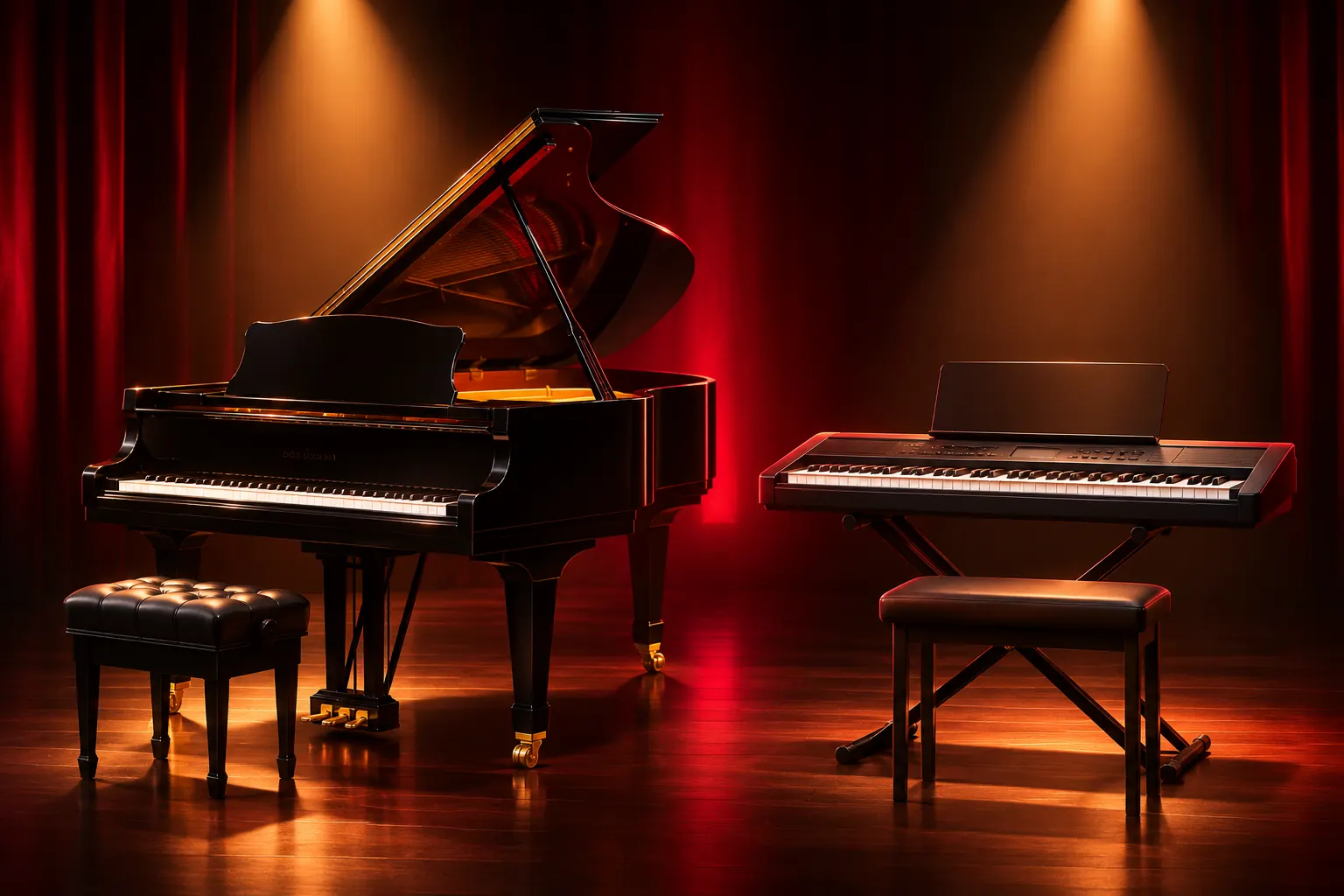
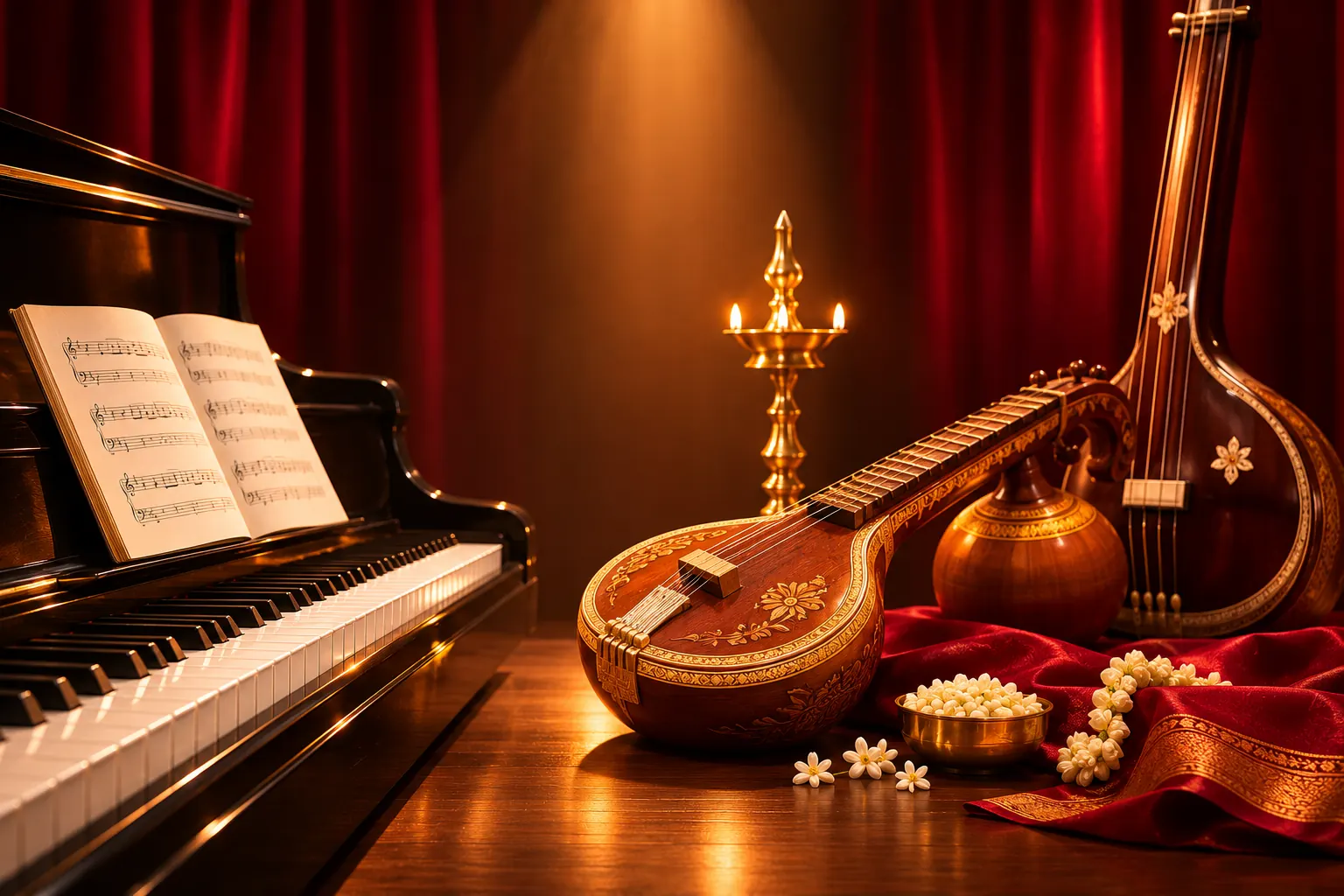
Chennai is one of the few cities in the world where a child can learn Bach and Tyagaraja on the same street. At Seven Notes we teach both Western music and Carnatic music — so parents often ask which path is right for their child.
How Western music is learnt
Western music is built around staff notation — reading music from the page — along with harmony (chords), scales and a wide repertoire from classical to pop. Students on piano, keyboard, guitar, flute, saxophone, recorder, drums and Western vocals typically follow structured levels and can take internationally recognised graded exams with boards such as Trinity College London and ABRSM.
How Carnatic music is learnt
Carnatic music — the classical music of South India — is built around raga (melodic framework) and tala (rhythmic cycle). Learning begins with Sarali varisais sung or played in three speeds, then grows through alankarams, geethams, jathiswarams, varnams and krithis. Ornamentation called gamaka gives each raga its character, and improvisation through raga alapana and kalpanaswaram comes later. Vocal, veena, flute and saxophone are all taught in this tradition at Seven Notes.
| Western | Carnatic | |
|---|---|---|
| Foundation | Staff notation, scales, chords | Swaras, ragas, talas, varisais |
| Strength | Harmony, reading, wide repertoire | Melody, ornamentation, rhythm, improvisation |
| Progress markers | Graded exams (Trinity, ABRSM…) | Graded levels, competitions, kutcheri performance |
| Instruments at Seven Notes | Piano, keyboard, guitar, drums, flute, sax, recorder, vocal | Vocal, veena, flute, saxophone |
Questions that help you decide
- What does your child listen to? Film and pop fans often enjoy keyboard or guitar; children who love devotional or classical music may connect with Carnatic straight away.
- What are the goals? International certificates point to Western exams; competitions, cultural roots and performance in the Carnatic tradition point the other way.
- Which instrument excites them? The instrument often decides the path.
Both traditions train the same things: a sharp ear, steady rhythm, focus and the joy of performing.
Can a child learn both?
Yes — and many musicians do. The ear-training of Carnatic music and the reading and harmony of Western music complement each other beautifully. We usually suggest starting with one, building a strong foundation, and adding the second when the student is ready.
Let's find the right path
Tell us your child's age and the music they love on WhatsApp — we'll recommend a starting point at our Madipakkam or Adambakkam branch.